
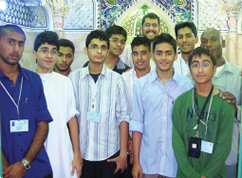
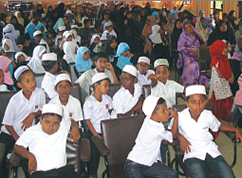

Having had the opportunity of going on Ziyarat before I was once again blessed to join the 2013 Madinah and Bab course as a mentor for the first time...

Translate this page

21 July 2026 / 5. Safar 1448
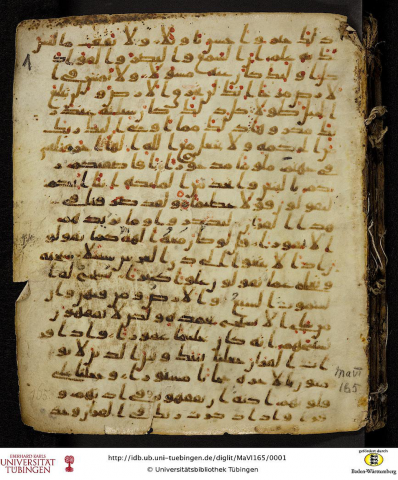
Manuscript of Qur’an Dated Just After the Demise of the Prophet (pbuh)
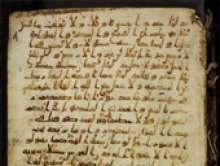 |
The new scientific dating of the oldest manuscript of Qur’an in the University of Tubingen Library in Germany reveals that it could be of a time just 20-40 years after the demise of the holy prophet (pbuh). In 1996, Prof Deroche in his Hijazi manuscript of Qur’an did mention about this manuscript which was not dated scientifically at that time. Now, when it is carbon dated, the result of C14 analysis suggests that it is possible that the dates are of Imam Ali’s time. |
However, radiocarbon is used for exploring animal’s death. In academic world, this methodology is not accepted to date a manuscript. Therefore wide ranging conclusions cannot be based on such methodology. However the results shown by this experiment is indeed fascinating.
Shaykh Kumail Rajani , the Head of Islamic Education commented “It is really a great contribution to Qur’anic manuscripts and this could be a precedent that the San’a manuscript which was been assumed to be the oldest. We commend the great efforts of Coranica project of German and French researchers. However a more accurate method of dating a text based on script analysis is yet to be explored”.
The Qur’an fragments could be traced in the link below:
http://idb.ub.uni-tuebingen.de/digitue/tue/Ma_Orientalische_Handschriften?liste=1
For more information, please email [email protected]
Related News

Following the success of the last workshop held in January 2014 in Hyderi , The World Federation, in partnership with The Council of European Jamaats, has organised another workshop for single males and females aged 18 and over on the topic of spouse selection.
“It made you re-evaluate your values and yourself, and the role play scenarios made you think” Hyderi, January 2014.
Updated 6 November 2013  The World Federation were invited to hold a stall at the Nahjul Balagha conference that took place on Sunday 29th September 2013 in Peterborough, UK.