





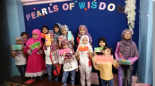
In August 2015, 102 children participated in a Read-a-thon organized to raise funds for The World Federation’s Ramadhan Relief Fund ‘Children Helping Children’ Campaign. The event was arranged through the Pearls of Wisdom Islamic Library for Children where each participant made a donation of the same amount towards the Ramadhan Relief Fund.

Translate this page

01 August 2026 / 16. Safar 1448
Eid al Hajj 1435: 910 Goat Qurbanis Completed
 |
Each year, in the Islamic month of Zilhajj, Muslims around the world celebrate Eid al Hajj, a religious holiday also known as the “Festival of Sacrifice”. This year, this event fell on the Gregorian calendar date of 5th October 2014. |
Eid al Hajj honors the willingness of Prophet Abraham (as) to sacrifice his son, Ishmael (as), as an act of submission to God’s command; at the time of the great sacrifice, God intervened to provide Abraham with a lamb to sacrifice instead. Qurbani (the sacrifice of a livestock animal during Eid al Hajj) has since been a key ritual in the annual Hajj pilgrimage to Makkah.
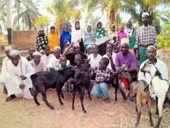
In keeping with the annual ritual of Qurbani, The World Federation facilitates the slaughtering of goats (qurbani) on behalf individuals who could not perform the Hajj but wish to benefit from the qurbani. The meat of the goats was later distributed among the poor and needy. This year, a total of 910 goats (qurbanis) were arranged in Kenya and Tanzania for Eid al Hajj by The World Federation on behalf of donors from around the world.
To view the full report for Eid al Hajj Qurbani 1435, click on the PDF attached.
We take this opportunity to thank everyone who supported this annual program where so many families in Kenya and Tanzania benefitted from the meat parcels.
For more information, please email [email protected]
Related News
In December 2013, the N2K Team, a group of youth from London (UK) walked from the Holy City of Najaf to the land of Karbala during Arbaeen 1435 to raise funds for The World Federation’s ‘Community Upliftment Project in Northeast Kenya’.
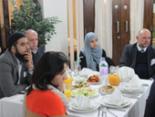
The Muslim Charities Forum (MCF) and the Charity Commission jointly hosted an Eid dinner held at the Muslim Cultural heritage Centre on Thursday 16th October 2014.

