




The World Federation is pleased to announce the availability of 3 titles as e-books.

Translate this page

21 July 2026 / 5. Safar 1448
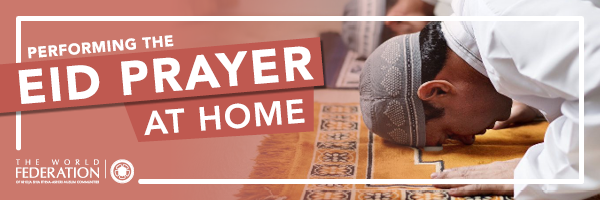
Performing the Eid Prayer at Home
In the name of Allah, the All-Beneficent, the Ever-Merciful
Performing the Eid Prayer at Home
By the Islamic Education department of The World Federation of KSIMC
This year, although we will not be going to a mosque to perform the Eid al-Fitr prayer, we should still try to perform it home as it is a recommended act of worship for the day.
If you can, try to join a live feed of the prayer. You would perform the prayer while following the imam with the intention of furada, i.e. of performing it on your own as opposed to in jama’ah (congregation). And you would recite everything.
If you cannot follow a live stream, you can perform the prayer yourself by observing a few simple rules. The following is based on the rulings of His Eminence Sayyid Ali al-Husayni al-Sistani (may Allah protect all our Maraji’):
1. Time: from sunrise to the time of zuhr prayers on the day of Eid.
2. Method: What follows is the short way of performing the prayer. For the longer method and more rulings about the prayer, please see here.
a. Two rak’ahs, with the intention of performing the Eid al-Fitr prayer, qurbatan ilallah.
b. First rak’ah: After reciting Surat al-Hamd and another surah, say three takbirs. Between each takbir, perform one qunut (and so there will be two qunuts in the rak’ah). After the third takbir, say another takbir, go into ruku’, perform two sajdahs, and stand up.
c. Second rak’ah: Follow the same instructions as for the first rak’ah, except after the second sajdah, say tashahhud and the salam of the prayer.
Note: In the qunuts, you can say any dua or dhikr (a salawat, for example, would suffice).
May Allah (swt) accept our acts of worship, ameen.
Related News

 In November and December 2013, The World Federation gifted 201 widows with food rations to help feed their families.