







Did you know you can raise funds for The World Federation while you shop online? Easy Fundraising is a company which has partnered up with many popular retailers, such as Amazon, John Lewis, Boots, ASOS, Tesco and many insurance and utility companies so that when you buy something from their websites, a percentage of the money goes to us!

Translate this page

03 August 2026 / 18. Safar 1448
Rebuilding Lives in the Philippines
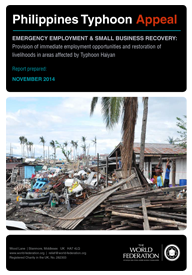 |
On 8 November 2013, when category 5 Typhoon Haiyan, locally known as Yolanda, hit the Philippines, it caused extensive damage to housing, livelihoods and infrastructure across nine of the country’s poorest provinces. The World Federation’s PHILIPPINES TYPHOON APPEAL was set up to help victims of the disaster. After consultation with local organisations, The World Federation was able to target and focus on employment and job creation as the most pressing areas of need in the region. Thanks to the support of donors from around the world, The World Federation was able to contribute USD 15,000 towards providing training in carpentry and small business recovery programs. Alhamdulillah, with your help, we were able to train 125 workers in woodwork skills and provide 25 small businesses with cash grants. |
For more information on the success of this project and how you can help with other similar programs, please email [email protected].
To read the full report click on the PDF attached.
Related News
With the month of Ramadhan only 29 days away now, the excitement is building amongst Muslims all over the world.
Nairobi Jaffery Academy is a private co-educational school in Nairobi, Kenya which provides excellence in education designed to meet the needs of individual students within a stimulating learning environment.

